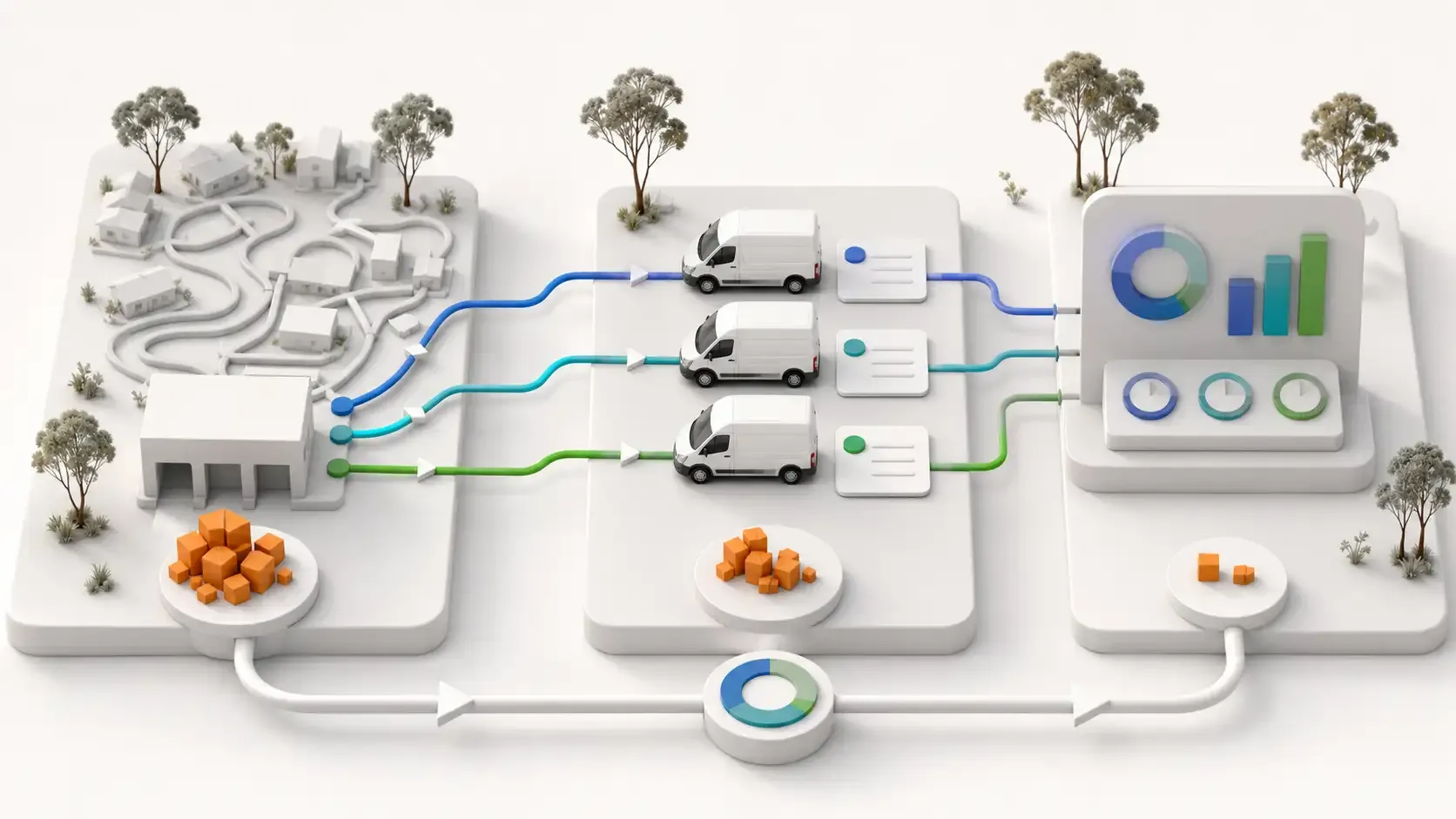
Delivery costs are shaped by more than distance. This guide explains how Australian teams can control avoidable costs by improving route plans, driver workflows and performance reviews.
Practical articles for delivery operators improving route plans, dispatch visibility, driver workflows, proof of delivery, and reporting.
Showing 18 australia articles.
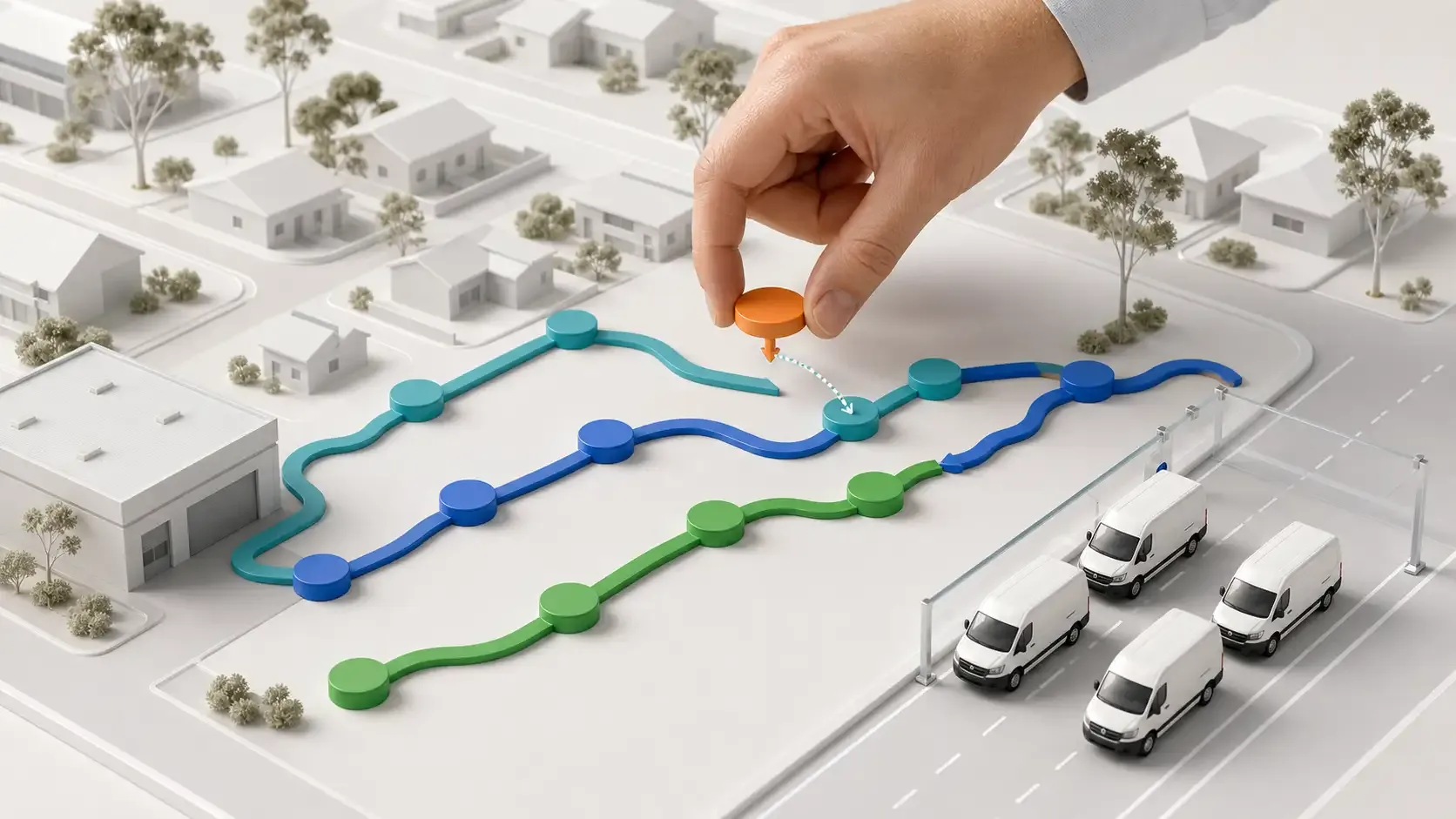
Delivery costs are shaped by more than distance. This guide explains how Australian teams can control avoidable costs by improving route plans, driver workflows and performance reviews.

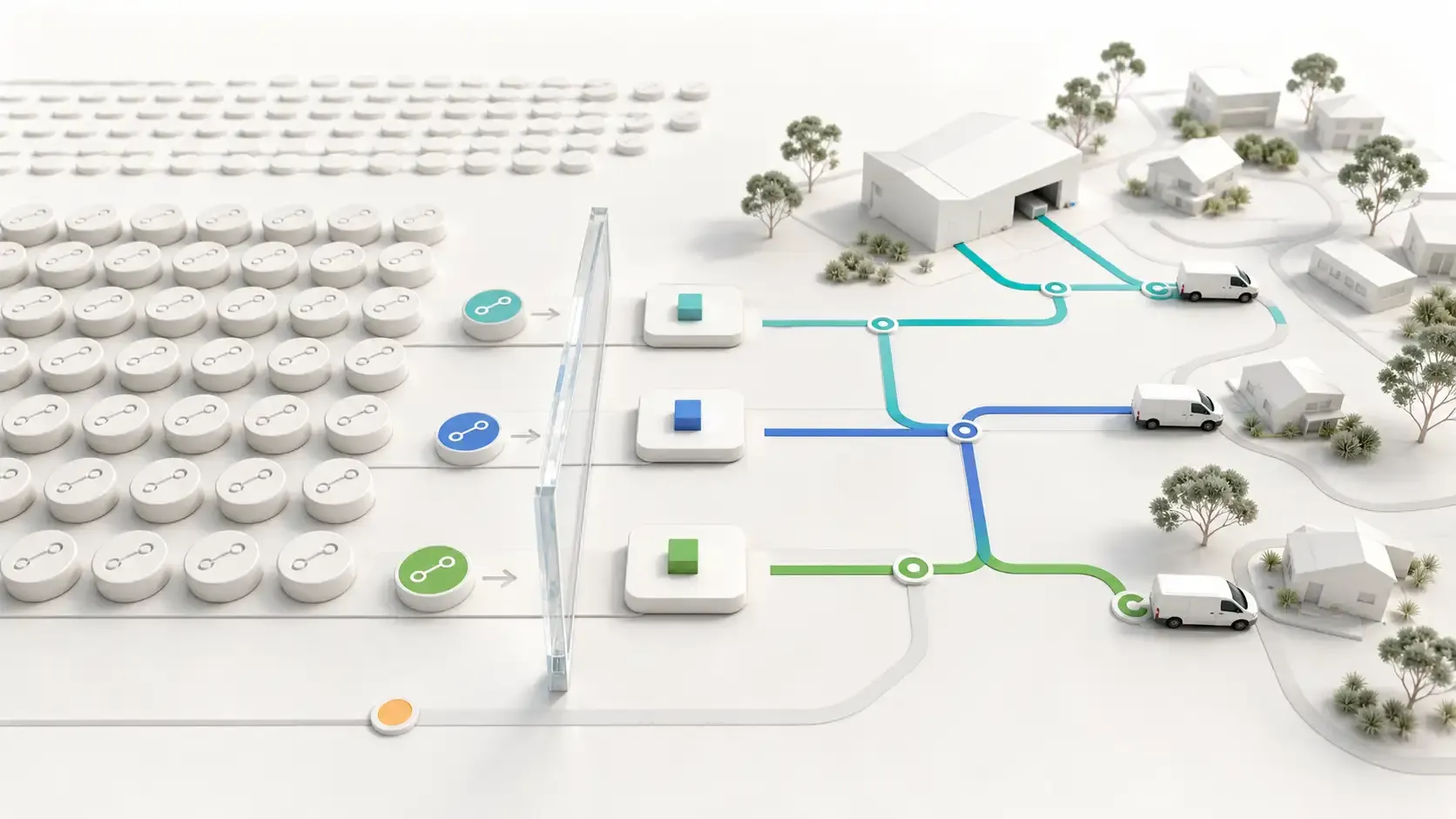
An optimized route should be reviewed before it reaches the driver. This guide explains how dispatchers can check workloads, ETAs, stop order, assignments and exceptions before dispatch.

Route-order credits provide a practical way for growing delivery teams to match routing costs with operational volume. This guide explains when credits are used and how to estimate monthly requirements.

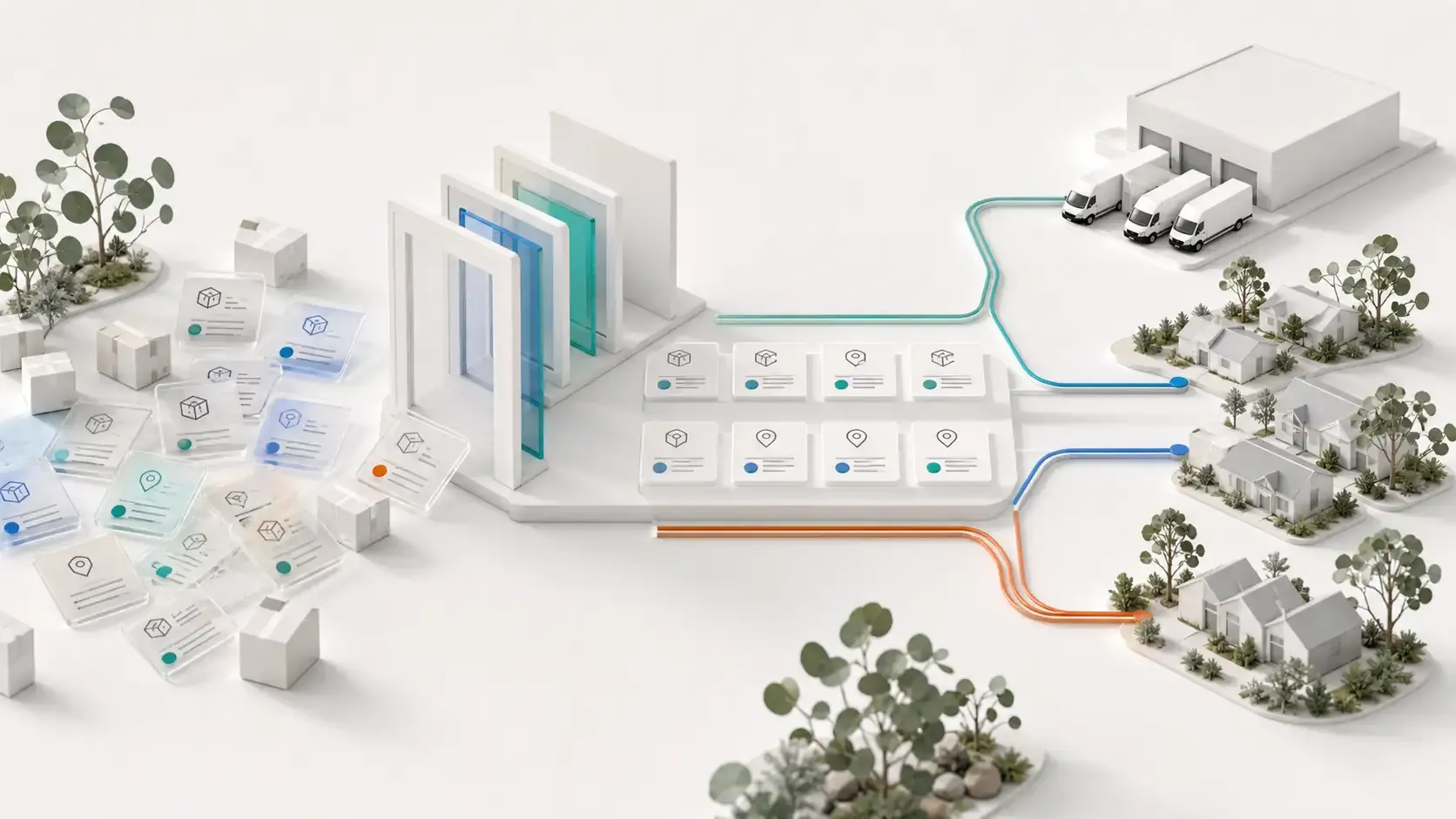
Clean mission data gives dispatchers a reliable foundation for route planning. Accurate addresses, time windows, service durations and delivery requirements can reduce rework and improve every dispatch cycle.
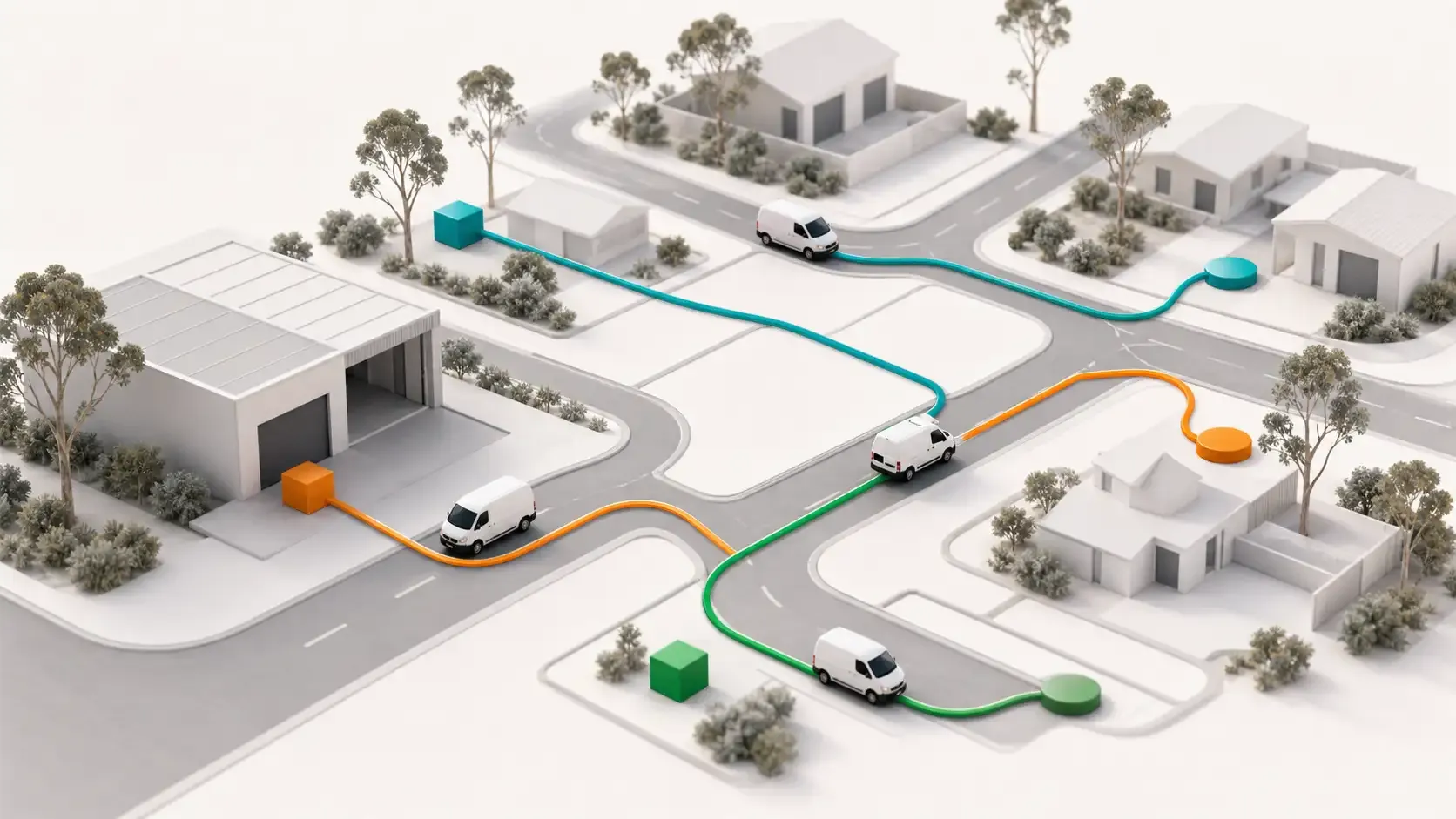
Pickup and delivery jobs require more than a standard delivery route. This guide explains how Australian teams can plan linked collection and destination stops with better control over timing, capacity and dispatch.
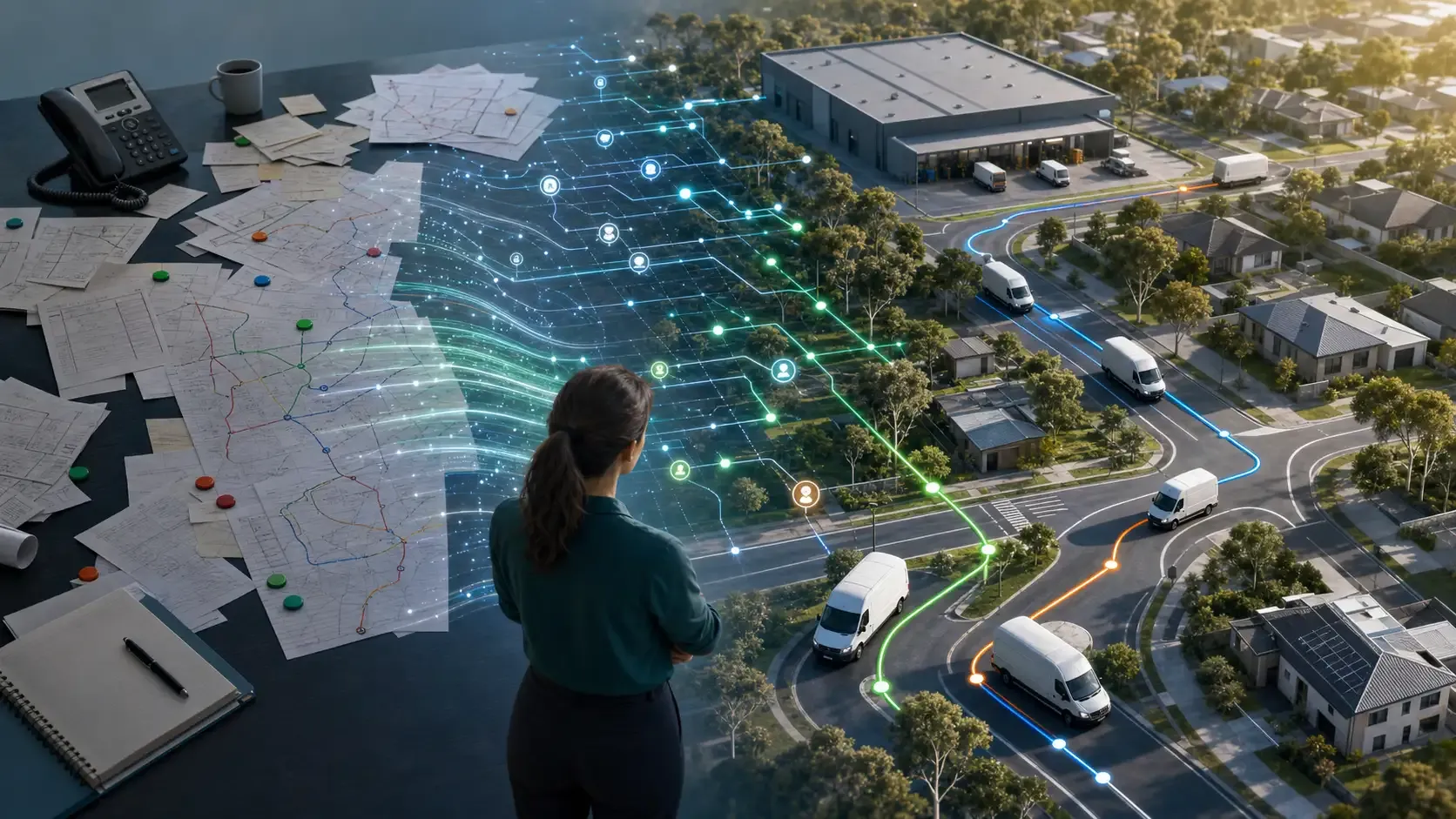
Manual dispatch becomes harder to manage as delivery volume, driver coordination and route complexity grow. This guide explains when Australian teams should move to route optimization software.
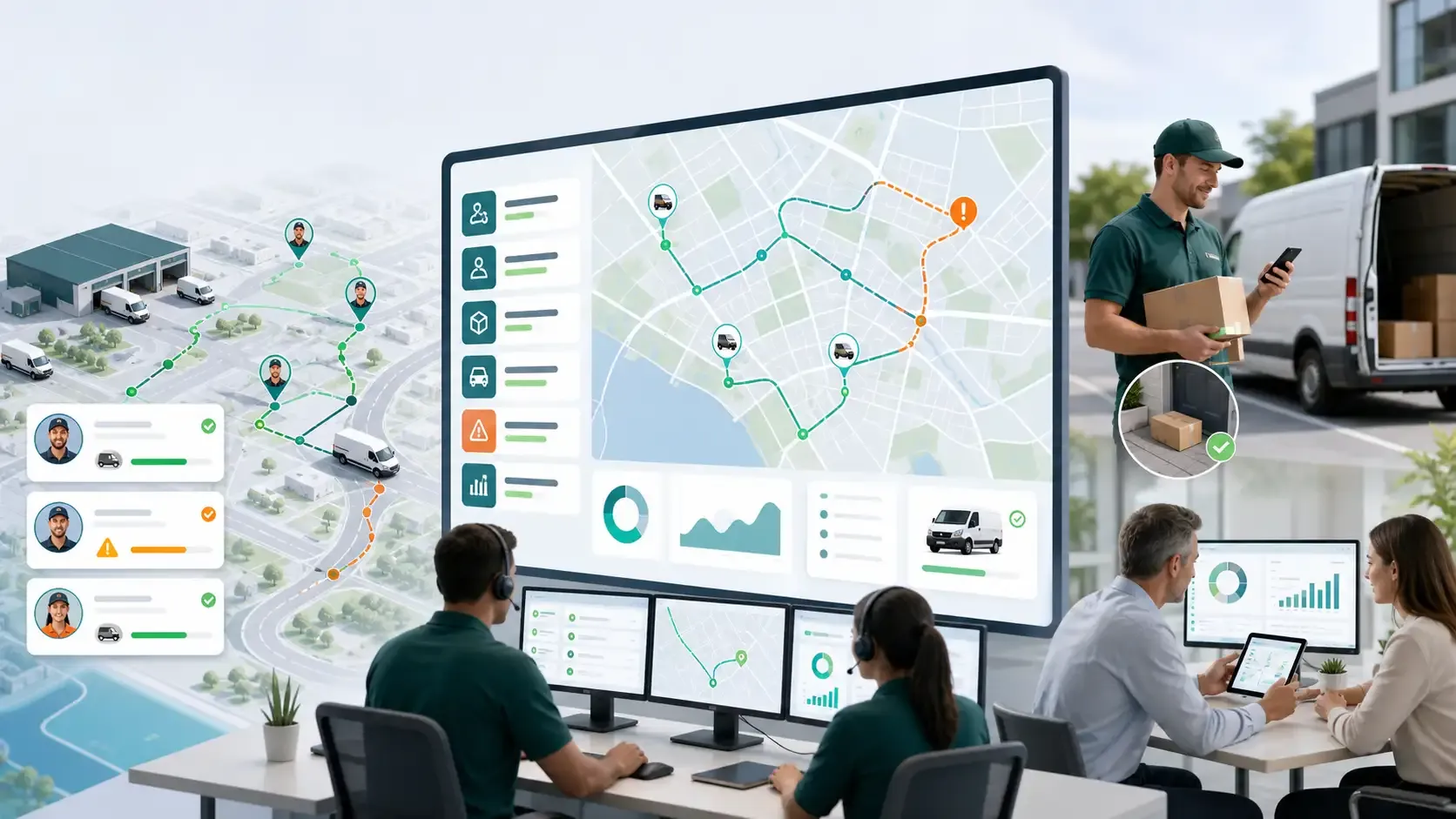
Live delivery monitoring works best when it helps dispatch teams manage exceptions, support drivers, and improve route decisions without turning visibility into constant driver pressure.
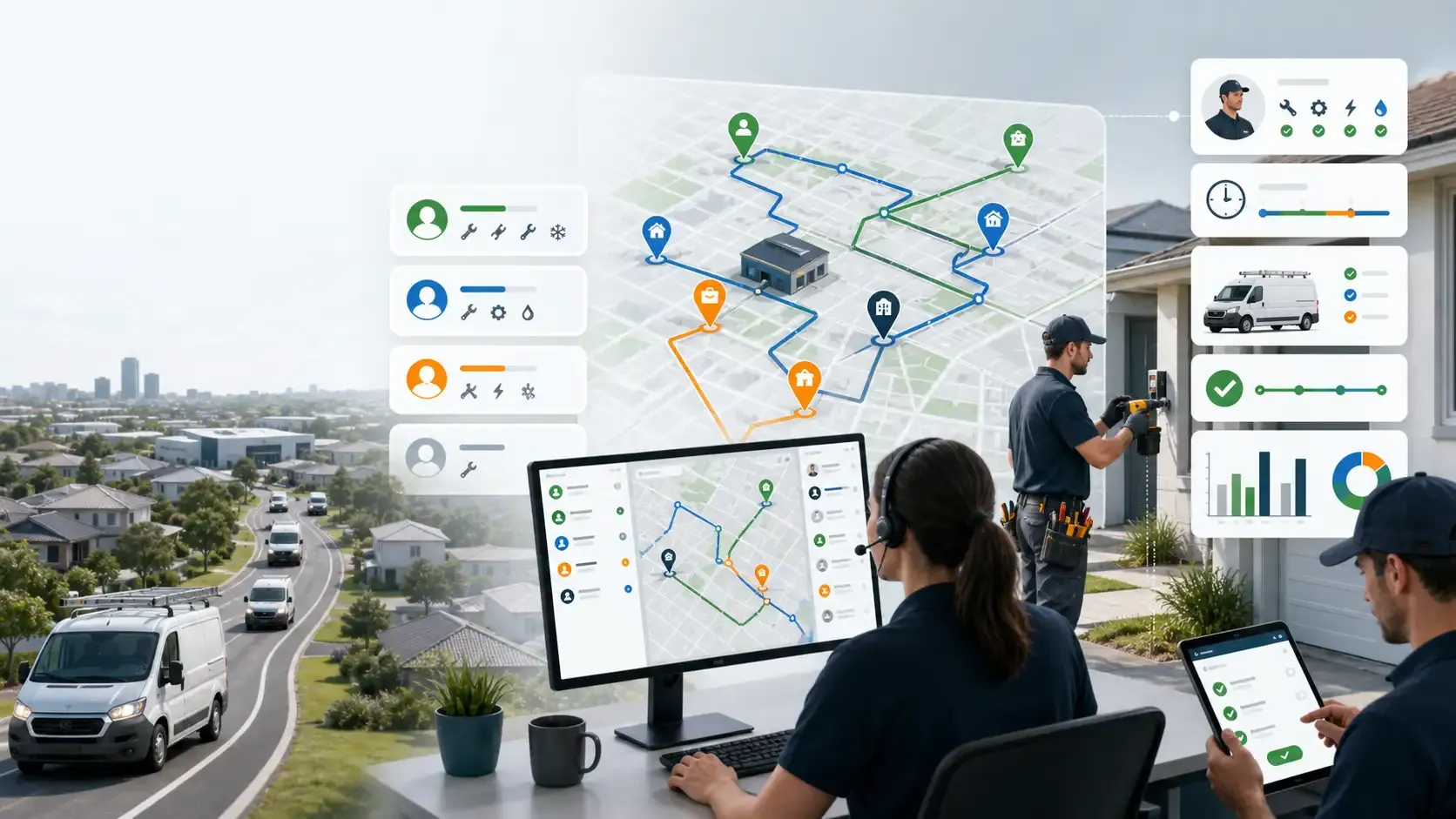
Field service routing is not only about driving distance. Teams need to match jobs with technician skills, appointment windows, service duration, vehicle context, live visibility, and completion reporting.
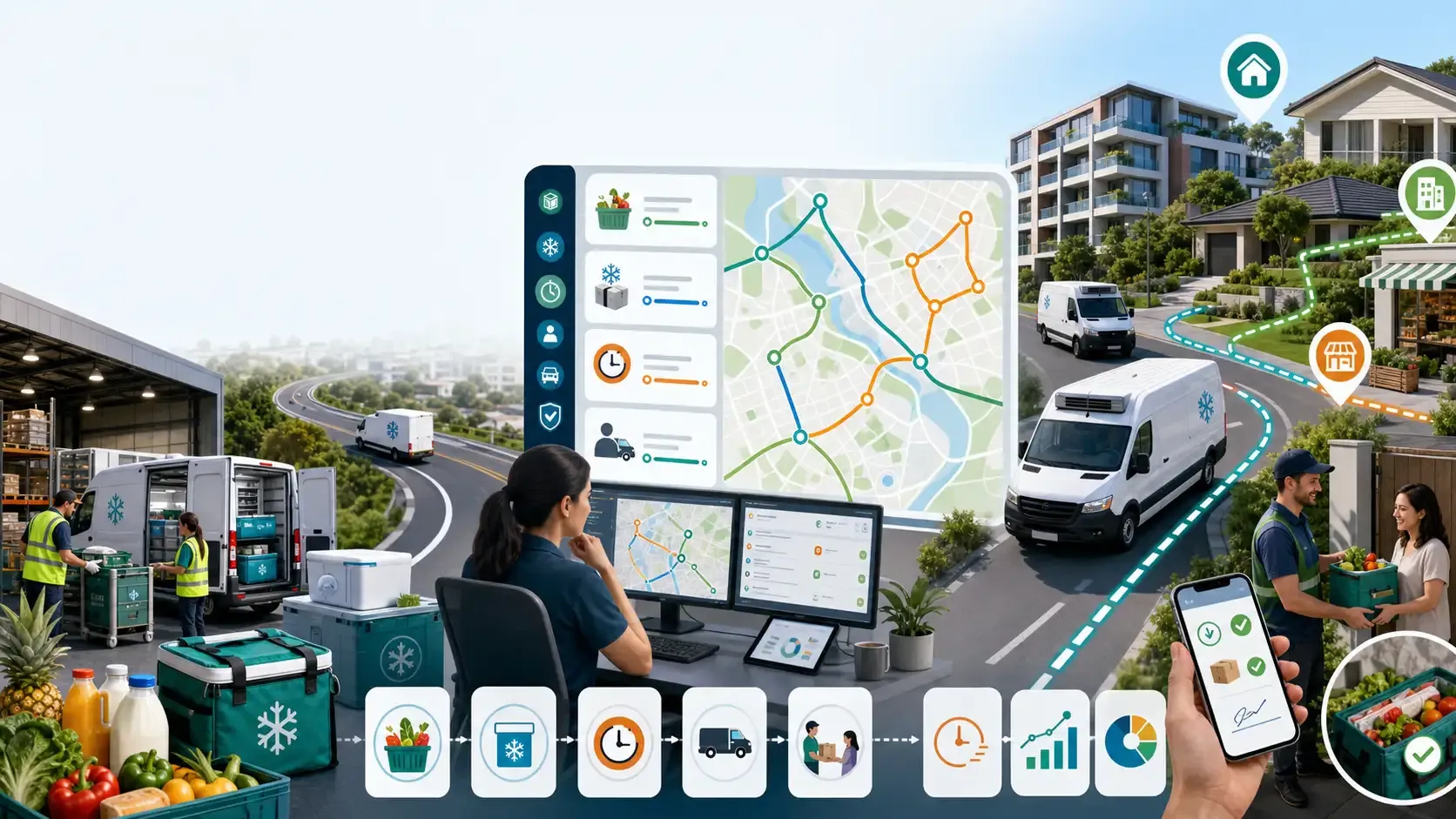
Grocery and food delivery routes need more than short distances. Teams must plan around customer time windows, freshness, vehicle suitability, driver context, live monitoring, and proof of delivery.