
Loading Rouptimize content…
Practical articles for delivery operators improving route plans, dispatch visibility, driver workflows, proof of delivery, and reporting.
Customer trust depends on every handoff between the original delivery promise and verified completion. Connected dispatch helps keep those handoffs visible and consistent.

Many delivery inquiries begin with missing operational information. Connected planning, dispatch, driver updates and verification can reduce uncertainty before it reaches customer service.

A failed delivery consumes more than fuel. It can create repeat driving, dispatch rework, customer support demand and commercial risk across the wider business.

Delivery time windows influence route sequence, fleet requirements and customer experience. The right approach balances reliable promises with enough flexibility to plan efficient routes.

More deliveries per vehicle should come from better mission allocation, route structure and fleet matching, not longer shifts or overloaded vehicles. This guide explains how to improve fleet productivity responsibly.
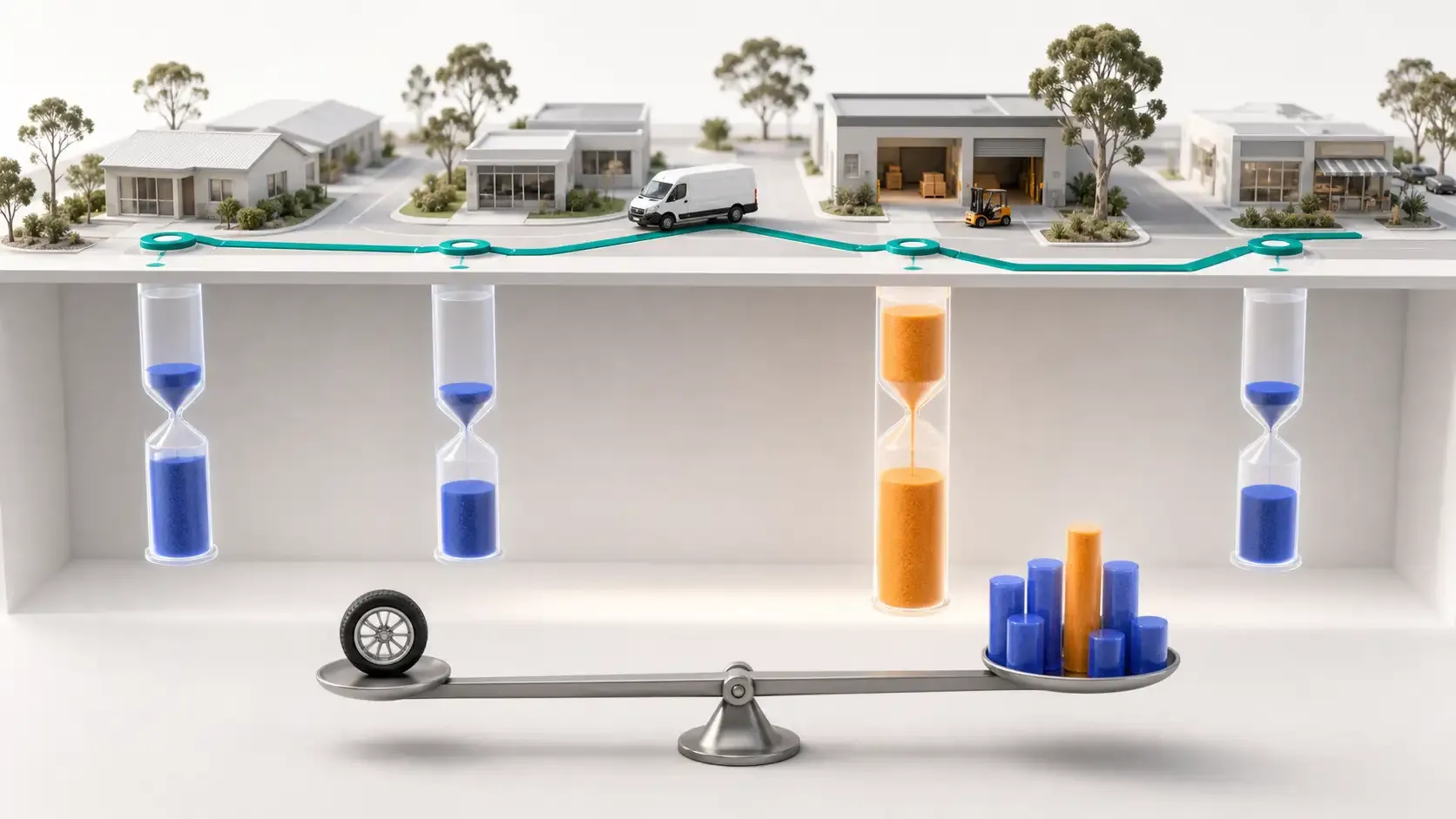
Short travel distances can hide hours of customer service activity. Accurate stop-duration data helps delivery teams create realistic routes, working windows and cost estimates.

Route optimization may help delivery teams complete the same work with fewer vehicles by improving mission allocation, capacity use and route structure. Daily vehicle use, however, is different from permanent fleet size.
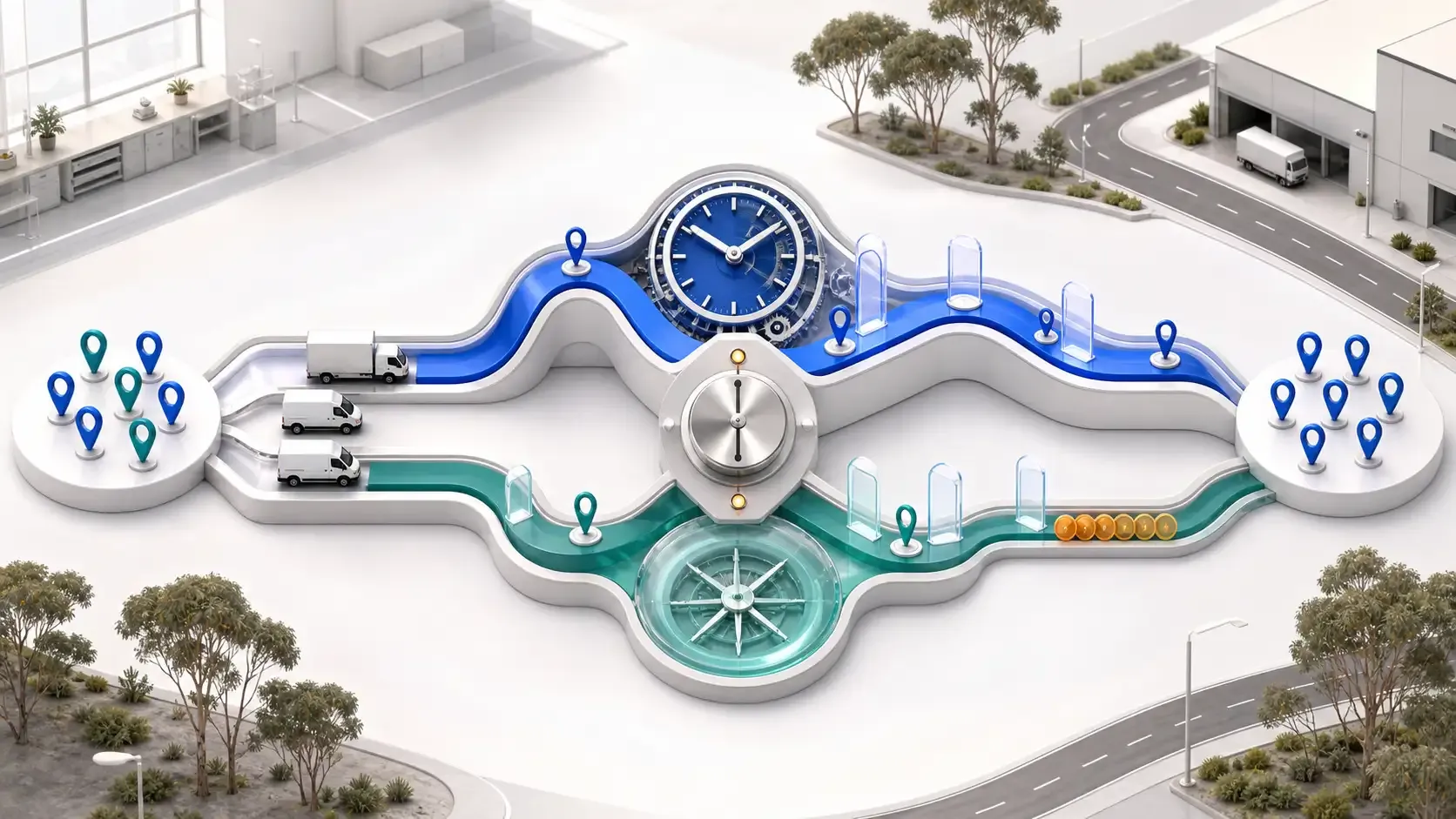
The lowest-distance route plan may require more operating hours, while the lowest-time plan may travel farther. The right objective depends on labour, vehicle, distance and service costs.
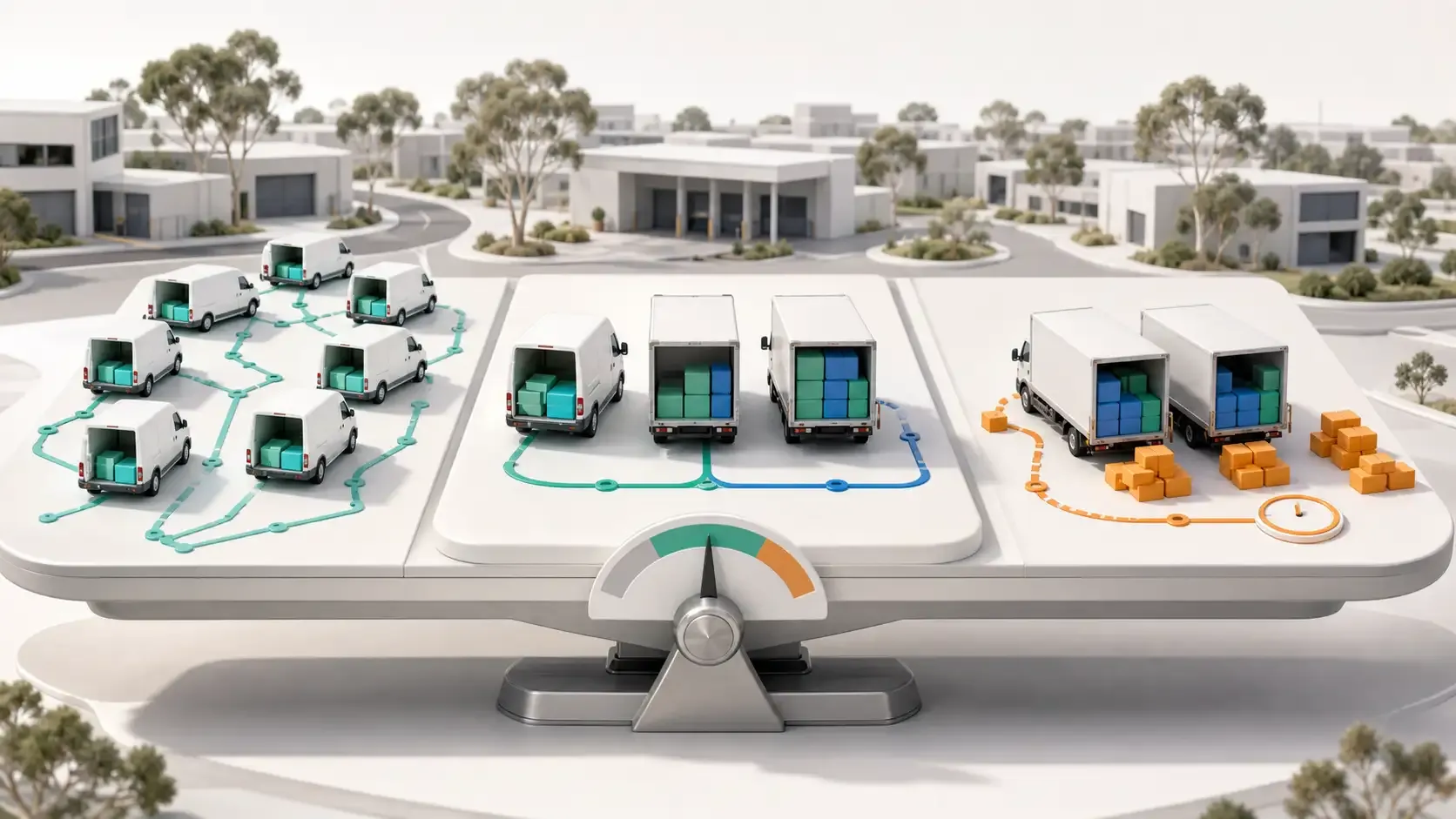
Using fewer vehicles and using vehicles more effectively are related but different goals. The right fleet plan balances capacity, route workload, working time, operating cost and enough flexibility to complete the delivery day.