Proof-of-Delivery Confirmation Codes: Simple Verification Without Heavy Driver Workflow
A confirmation code gives delivery teams a lightweight way to verify completion, reduce disputes, and keep proof-of-delivery tied to the mission record.
On this page
Proof of delivery is one of the most important parts of the delivery process.
A route is not truly complete just because a driver reached the stop. The operations team needs to know whether the delivery was completed, who confirmed it, when it happened, and whether the final status is connected to the right mission record.
For Australian courier, ecommerce, grocery, field service, and last-mile delivery teams, this matters because delivery disputes create real operational cost. A customer may say the order was not received. A driver may remember the stop differently. A manager may need to check what happened days later.
A proof-of-delivery confirmation code gives teams a lightweight way to verify completion without adding a heavy process for drivers or customers.
Why Proof of Delivery Needs to Stay Simple
Proof-of-delivery workflows can become too complicated.
If the driver has to complete too many steps, the workflow slows down. If the customer has to sign a long form or answer too many questions, the experience becomes awkward. If managers need to search through screenshots, notes, calls, and spreadsheets, the proof is not operationally useful.
The best proof-of-delivery process is simple at the point of delivery and reliable after the delivery is complete.
That is why code-based verification is useful. A customer confirmation code can create a clear handover moment without forcing the driver to manage a heavy administrative process.
Rouptimize’s proof of delivery software helps teams connect delivery completion with mission status, driver workflow, and operational records.
What Is a Proof-of-Delivery Confirmation Code?
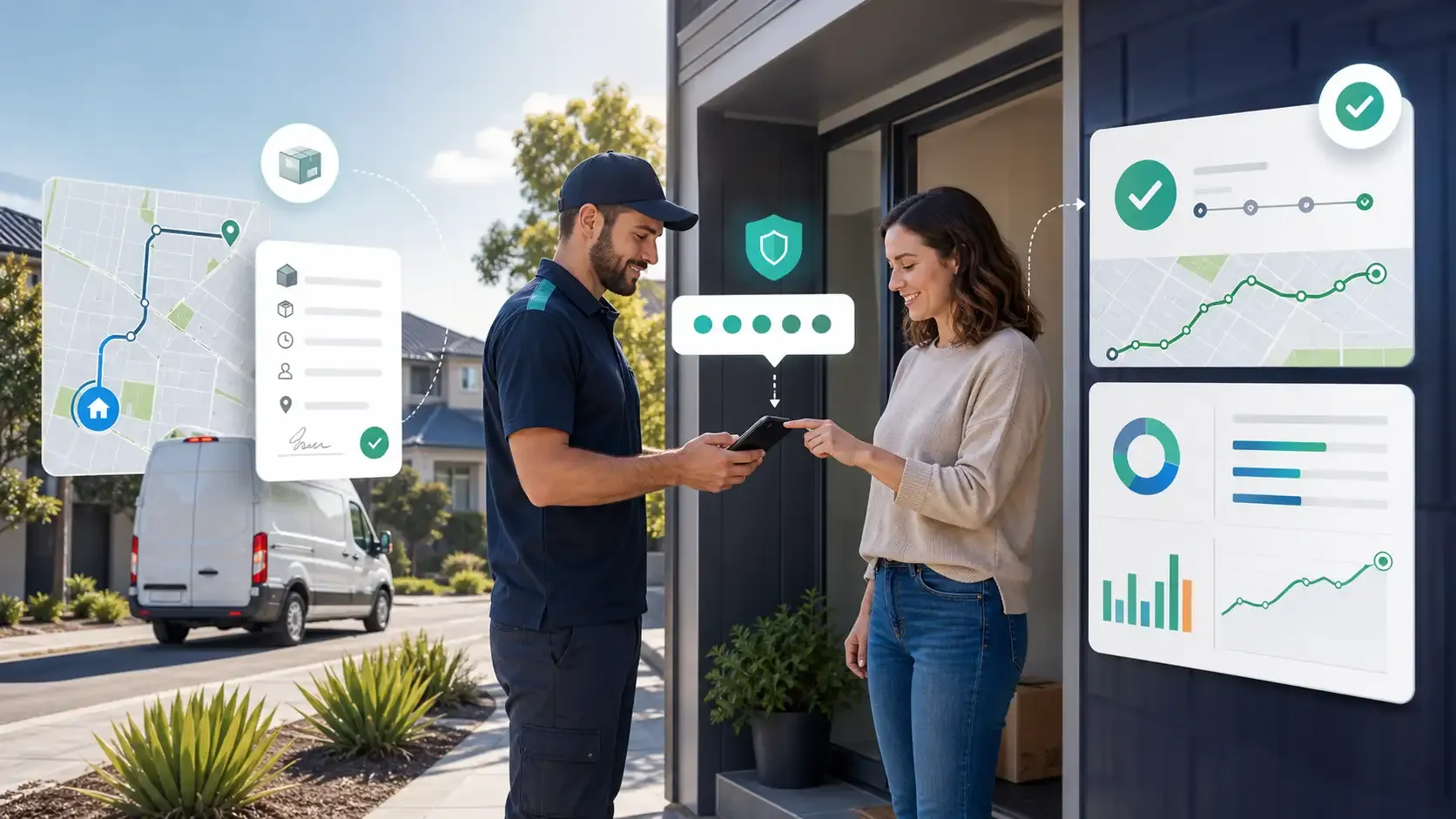
A proof-of-delivery confirmation code is a short code used to confirm that the delivery was received.
The workflow is simple:
- The driver arrives at the delivery location.
- The customer provides or confirms the delivery code.
- The driver enters the code in the mobile workflow.
- The delivery status is updated against the mission record.
- The operations team can review the completed delivery later.
The value is not only the code itself. The value is that the driver action, customer confirmation, and delivery status are connected to the same mission.
That connection helps reduce confusion when a customer, dispatcher, or manager needs to review what happened.
Why Confirmation Codes Reduce Delivery Disputes
Delivery disputes are difficult when the business has weak proof.
A driver may say the parcel was delivered. A customer may say it was not. A dispatcher may only see that the route was marked complete. Without a reliable proof record, the team has to investigate manually.
A confirmation code helps create a clearer delivery event.
It can show that the driver completed the stop with customer involvement, and that the result was recorded in the delivery system. This does not remove every possible dispute, but it gives the operations team a stronger record than a vague status update.
For delivery operators in Australia, where customer expectations around ecommerce and last-mile delivery continue to rise, this kind of lightweight verification can support better service and fewer repeated support issues.
Why Codes Work Well for Driver Workflows
Drivers need fast workflows.
A good driver workflow should help them see assigned stops, navigate to the customer, complete the delivery, record proof, and move to the next stop without unnecessary friction.
A confirmation code fits this workflow because it is direct. The driver does not need to write long notes or complete a complex checklist for every normal delivery. The customer does not need to handle a complicated process either.
The confirmation step becomes part of the natural handover.
Rouptimize connects proof-of-delivery activity with the driver delivery app, helping delivery teams keep field work and mission records aligned.
Why Proof Must Be Tied to the Mission Record
Proof of delivery becomes much more useful when it is tied to the actual mission record.
A mission record may include the customer, address, delivery date, driver, vehicle, route, status, time window, and final completion details. If proof is stored separately, managers may still need to reconcile information manually.
That creates delay.
When the proof status is tied to the mission, the delivery team can review the record without rebuilding the story from multiple systems.
This helps answer questions such as:
- Which customer received the delivery?
- Which driver completed the mission?
- When was the mission completed?
- Was confirmation collected?
- Did the mission finish as planned?
- Is there a proof gap that needs review?
Rouptimize’s delivery mission management software helps keep mission details connected to planning, dispatch, driver work, and delivery completion.
Confirmation Codes vs Heavy Proof Processes
Some proof workflows are useful for special cases but too heavy for everyday delivery.
For example, high-value, regulated, or complex deliveries may need signatures, photos, notes, ID checks, or additional documentation. But many last-mile deliveries need a faster process that confirms completion without slowing the route.
A confirmation code works well when the business needs a practical balance:
- Stronger than a simple “completed” button
- Faster than a long manual form
- Easier for drivers than writing notes
- Easier for customers than complicated proof steps
- Clear enough for managers to review later
The right proof workflow should match the delivery type. Not every stop needs the same level of process.
Where Confirmation Codes Fit in the Dispatch Cycle
Proof of delivery is not only a driver task. It is part of the full delivery cycle.
A practical workflow looks like this:
- Import or create the delivery mission.
- Plan and optimize the route.
- Assign the route to the driver.
- Driver completes the stop.
- Customer confirmation code verifies completion.
- Mission status updates.
- Managers review delivery performance and proof records.
This is why proof should not be disconnected from route planning and dispatch.
When proof sits inside the same operational workflow, managers can compare planned work, completed work, and verified outcomes more easily. This is especially useful for Australian delivery teams managing multi-branch operations, dense metro routes, or high-volume ecommerce delivery.
For the planning side of this workflow, see how teams can move from route planning from import to dispatch.
How Confirmation Codes Support Better Reporting
Proof-of-delivery data becomes valuable when it appears in reports.
Managers need to know which deliveries were completed, which proof records are missing, which drivers or routes have repeated proof gaps, and whether specific customers or branches create more exceptions.
This turns proof of delivery from a single delivery step into an operational insight.
A confirmation code can help reporting answer:
- Which missions were verified?
- Which completed deliveries are missing proof?
- Which routes had proof exceptions?
- Which drivers need workflow support?
- Which customers create repeated disputes?
- Which branches need better delivery controls?
Rouptimize’s delivery reports and analytics help teams review delivery activity and route outcomes without forcing spreadsheet cleanup first.
You can also read more about delivery metrics that matter for improving the next dispatch cycle.
Why This Matters for Route Optimization
Route optimization is not only about planning the route before drivers leave.
A strong delivery operation also needs to know what happened after the route was dispatched. Did the driver complete the mission? Was proof collected? Did the customer confirm receipt? Did the route finish as expected?
That information helps managers improve the next plan.
When proof-of-delivery records stay connected to route and mission data, teams can make better decisions about route size, driver workload, customer expectations, and operational exceptions.
This is why route optimization software becomes more valuable when it is connected to dispatch, driver workflows, proof of delivery, and reporting.
Common Mistakes in Proof-of-Delivery Workflows
Many teams collect proof, but still struggle to use it well.
Common mistakes include:
- Treating proof as a separate document instead of part of the mission record
- Asking drivers to complete too many manual steps
- Not separating normal deliveries from exception cases
- Recording delivery completion without customer confirmation
- Reviewing disputes without connected route and driver context
- Keeping proof data outside operational reports
These problems make proof harder to trust.
A better process keeps the driver workflow simple, the customer confirmation clear, and the final delivery status connected to the mission.
Conclusion: Lightweight Proof Builds Stronger Delivery Control
Proof of delivery does not need to be heavy to be useful.
A confirmation code gives delivery teams a simple way to verify completion, reduce disputes, and keep the driver workflow moving. The real value comes when that confirmation is tied to the mission record, route context, driver activity, and final delivery status.
For Australian delivery teams looking for practical delivery verification, confirmation codes can support a better balance: simple for drivers, clear for customers, and useful for managers.
Rouptimize helps teams connect proof of delivery with mission management, route planning, driver workflows, live monitoring, and reporting so delivery completion can be verified without adding unnecessary process.
Start free with Rouptimize
Written by

Results-oriented and visionary CEO with a passion for innovation and a track record of transforming startups into industry leaders. Seeking a leadership role in a dynamic startup environment where I can leverage my strategic acumen, entrepreneurial spirit, and hands-on experience to drive growth, build high-performing teams, and deliver unparalleled value to customers. Committed to fostering a culture of creativity, adaptability, and sustainable success.
Operations • Management • Route Optimization • Product Management • Logistics • Problem Solving
FAQ
What is a proof-of-delivery confirmation code?
A proof-of-delivery confirmation code is a short code used to confirm that a delivery was received. The driver enters or verifies the code during the delivery workflow, and the completion status is tied to the mission record.
Why are confirmation codes useful for delivery teams?
Confirmation codes help delivery teams reduce disputes, verify completion, and create a clearer record of the customer handover without adding a heavy process for drivers or customers.
Are confirmation codes better than signatures?
It depends on the delivery type. Signatures may be useful for high-value or regulated deliveries, but confirmation codes are often faster and simpler for everyday last-mile delivery workflows.
How do confirmation codes help drivers?
Confirmation codes give drivers a clear, lightweight completion step. They can confirm delivery without writing long notes or completing unnecessary paperwork for every normal stop.
Why should proof of delivery be connected to the mission record?
Proof is more useful when it is connected to the customer, route, driver, vehicle, delivery date, and final mission status. This helps managers review completed work and investigate disputes faster.
How does proof of delivery support reporting?
Proof-of-delivery data helps managers see which deliveries were verified, which proof records are missing, where disputes appear, and which routes or branches need process improvement.
What makes confirmation codes useful for Australian delivery teams?
Australian delivery teams often manage high customer expectations, metro congestion, regional distance, and rising delivery costs. Confirmation codes help create a reliable proof process without slowing everyday delivery work.