Multi-Branch Delivery Operations: How Australian Teams Can Plan by Branch, Depot, and Driver
Multi-branch delivery operations need more than one shared route plan. Teams need branch context, depot structure, driver assignment, route visibility, and reporting that reflects how the business actually works.
 Mohammad AlavitabarCEO @ Rouptimize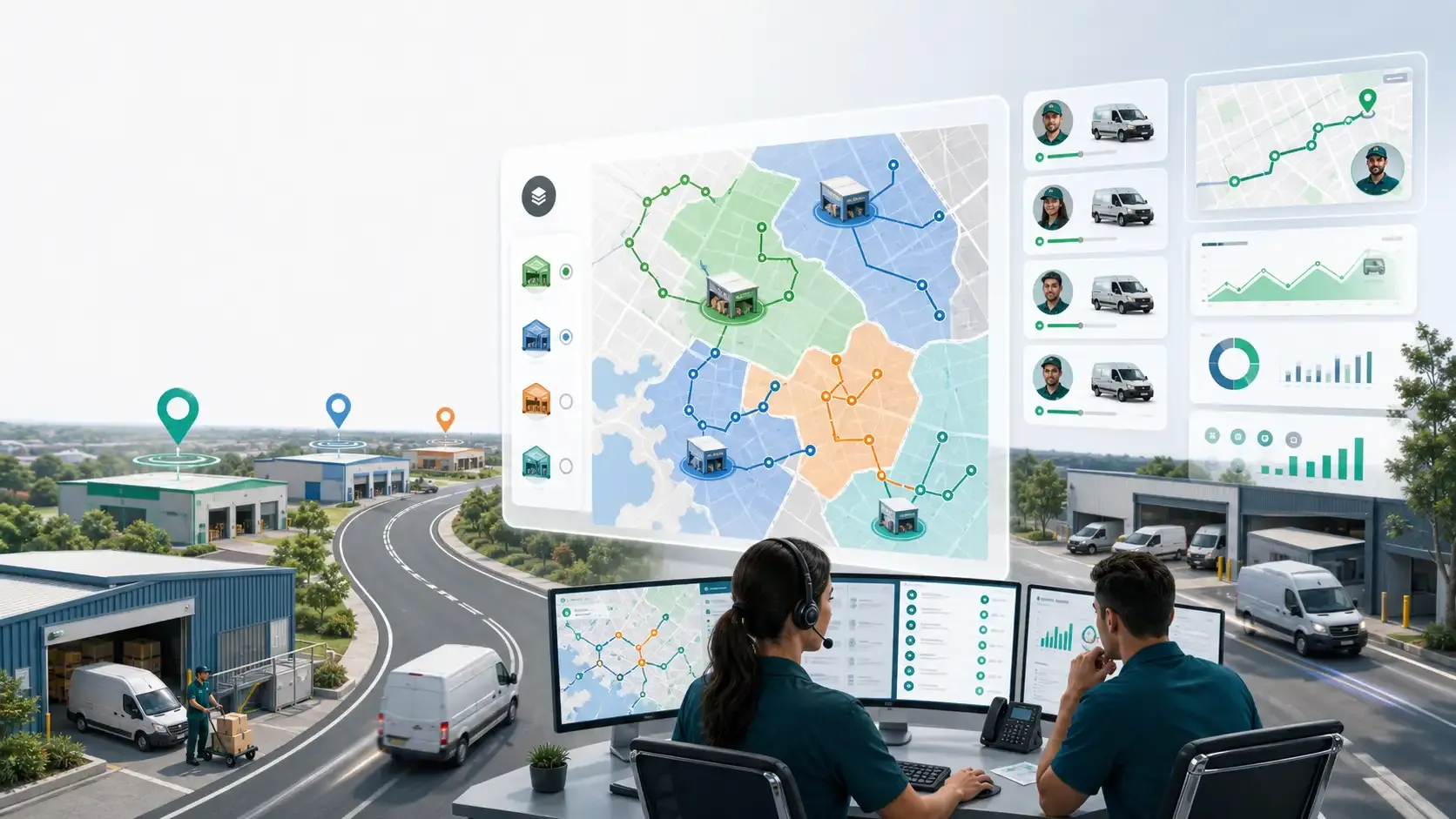
On this page
Delivery planning becomes harder when one operation turns into many.
A single branch may be able to manage routes with local knowledge, manual adjustments, and a small driver group. But when the business expands across multiple branches, depots, delivery zones, and driver teams, the old planning process starts to break.
For Australian courier, ecommerce, grocery, bulky goods, field service, and last-mile delivery teams, multi-branch delivery operations need more than one shared route plan.
They need branch context, depot structure, vehicle and driver assignment, dispatch visibility, live monitoring, and reporting that reflects how the business actually works.
Why Multi-Branch Delivery Is Different
Multi-branch delivery is not just a larger version of single-branch delivery.
Each branch may have different drivers, vehicles, depots, delivery areas, customer density, service expectations, and operational bottlenecks. A route that makes sense for one branch may be unrealistic for another.
In Australia, this matters because delivery conditions can vary widely between metro areas, outer suburbs, industrial zones, and regional service areas. A branch in Sydney may face different route pressure from a branch in Perth, Brisbane, Melbourne, Adelaide, or a regional hub.
Multi-branch planning needs structure.
Without it, dispatchers may mix work between branches, assign drivers to the wrong depot, overload one team while another has spare capacity, or lose visibility when routes are active.
Rouptimize’s multi-branch delivery operations solution is designed around this kind of distributed delivery workflow.
Branch Context Should Be Part of Every Mission
A delivery mission should not exist in isolation.
In multi-branch operations, each mission usually belongs to a branch, depot, customer group, service area, or operating team. If that context is missing, the route plan becomes harder to trust.
Branch context helps answer:
- Which branch owns this delivery?
- Which depot should the route start from?
- Which drivers are available for this work?
- Which vehicles are assigned to this branch?
- Which dispatcher should review the route?
- Which reports should include this mission?
Rouptimize’s delivery mission management software helps keep mission details connected to planning, dispatch, driver work, and reporting.
For multi-branch teams, this connection matters because branch-level visibility starts with the mission record.
Depots Shape the Route Plan
Depot location has a major impact on route quality.
A delivery route often starts from a depot, ends at a depot, or uses the depot as the operating base for vehicles, drivers, and inventory. If the wrong depot is used, routes may become longer, drivers may waste time, and branch capacity may be misread.
Good depot planning helps teams understand:
- Where vehicles begin the day
- Where routes should start and end
- Which branch owns each depot
- Which drivers and vehicles are connected to that depot
- Which delivery zones are practical from that location
- Whether another depot would reduce travel time
Rouptimize’s guide on how to set up branches and depots is useful for teams building this structure into daily operations.
A route plan is much stronger when depot context is clear before optimization begins.
Plan Routes by Real Operating Areas
Multi-branch delivery teams often need to separate work by operating area.
This could mean planning by city, suburb, branch, depot, delivery zone, customer group, or route territory. The goal is to avoid sending work to the wrong team or creating routes that cross inefficient service boundaries.
Australian delivery teams often face wide operating areas. A branch may cover dense metro deliveries, while another handles outer suburbs or regional routes. Treating all work as one pool can create inefficient assignments.
A better planning workflow lets teams filter, group, and review work by branch and operating context.
Rouptimize’s dispatcher map helps dispatchers review route geometry, depots, mission details, assignments, and stop order in the planning workflow.
This gives teams a clearer view of which work belongs where.
Driver and Vehicle Assignment Must Match the Branch
Multi-branch operations depend on clear driver and vehicle assignment.
A driver may belong to one branch. A vehicle may be available at one depot. A route may require a specific vehicle type or capacity. If assignments are made without branch context, the dispatch plan can become confusing.
Common multi-branch assignment problems include:
- Drivers receiving routes from the wrong branch
- Vehicles assigned outside their depot
- Routes planned without the right driver availability
- Branch managers losing visibility into their own work
- Dispatchers manually correcting assignments before departure
Rouptimize’s fleet management features help teams manage vehicles, drivers, assignments, capacity, skills, and operating context.
When branch, depot, vehicle, and driver data stay connected, route assignment becomes more reliable.
Route Optimization Needs Branch-Level Inputs
Route optimization works best when it receives the right operating context.
If all missions are optimized together without branch, depot, vehicle, and driver structure, the result may look efficient but still be operationally wrong.
A good route optimization software workflow should help teams plan around:
- Branch context
- Depot start and end points
- Vehicle capacity
- Driver availability
- Delivery time windows
- Stop duration
- Mission priority
- Service areas
- Route review before dispatch
For multi-branch delivery operations, optimization is not only about shorter routes. It is about producing routes that match the real structure of the business.
Dispatchers Need Visibility by Branch
A national or multi-location delivery operation cannot rely on one overloaded dispatch view.
Dispatchers and managers need visibility into the right branch, date, route, driver, vehicle, and mission context. Without that structure, teams spend too much time searching for information.
Branch-level dispatch visibility helps teams answer:
- Which routes are planned for this branch today?
- Which drivers are assigned?
- Which vehicles are active?
- Which missions remain unassigned?
- Which route needs review before dispatch?
- Which active route is falling behind?
- Which branch has repeated exceptions?
Rouptimize’s documentation on how to use the dispatcher map shows how map-based dispatch context helps teams review daily work.
The more branches a business operates, the more important structured visibility becomes.
Drivers Need the Right Work in the Mobile App
Drivers should not have to interpret branch logic manually.
If a driver receives the wrong route, wrong mission, or incomplete context, the issue becomes a field problem. The driver may call dispatch, delay departure, or complete work with unclear instructions.
A driver delivery app helps keep assigned routes and mission details connected to the driver workflow.
For multi-branch teams, this means the right driver should see the right work from the right branch, with the right route context.
Driver clarity is especially important when multiple teams, depots, and operating areas are active on the same day.
Live Monitoring Across Branches
Once routes are active, managers need to know what is happening across branches.
A branch may be on schedule while another is falling behind. One depot may have repeated delays. One driver group may need support. One route may require attention before a time window is missed.
Live delivery monitoring helps dispatchers follow selected drivers, vehicles, live locations, last updates, and mission context while routes are in progress.
For Australian multi-branch operations, live monitoring supports better exception management.
The goal is not to micromanage every driver. The goal is to see the right issues early enough to act.
Proof of Delivery Should Stay Connected to Branch Records
Proof of delivery is more useful when it stays connected to the mission, route, driver, and branch.
If proof data is separated from the branch workflow, managers may struggle to understand which team completed the delivery, where a dispute belongs, or which operational process needs attention.
Rouptimize’s proof of delivery software helps teams connect delivery confirmation with the mission record.
For multi-branch delivery teams, this matters because proof gaps and customer disputes should be traceable to the right route, driver, and operating branch.
Reports Should Compare Branch Performance
Multi-branch reporting should help managers compare performance without forcing manual spreadsheet cleanup.
A useful report should help answer:
- Which branch completed planned work?
- Which branch had the most delayed missions?
- Which routes were overloaded?
- Which drivers had repeated exceptions?
- Which depots created longer travel times?
- Which branch needs more capacity?
- Which operating area needs better planning rules?
Rouptimize’s delivery reports and analytics help teams review route performance, driver activity, mission history, and operational bottlenecks.
This helps managers move from broad assumptions to branch-level decisions.
Why Multi-Branch Planning Matters in Australia
Australian delivery teams often expand across regions with very different conditions.
A branch in a dense city area may need high stop density and tight dispatch control. A regional branch may need longer route planning and more careful depot selection. A grocery branch may need time-window discipline. A bulky goods branch may need stronger vehicle capacity planning.
A single planning model may not work for every branch.
Multi-branch delivery operations need flexibility and structure at the same time. Teams need local control, but managers still need visibility across the full operation.
That is why branch, depot, driver, route, and reporting context should stay connected.
Common Multi-Branch Delivery Mistakes
Many growing delivery teams make the same mistakes.
They treat all delivery work as one pool. They plan routes without depot context. They assign drivers outside their operating branch. They compare branch performance without considering route mix. They keep local knowledge in people’s heads instead of the planning workflow.
These mistakes create dispatch friction.
A better approach is to structure delivery operations around the way the business actually runs: branches, depots, drivers, vehicles, missions, routes, live status, proof, and reports.
Conclusion: Multi-Branch Delivery Needs Connected Planning
Multi-branch delivery operations are harder to manage because the work is distributed.
Australian teams need to plan by branch, depot, vehicle, and driver while keeping route optimization, dispatch, mobile workflows, live monitoring, proof of delivery, and reporting connected.
The goal is not only to create routes. The goal is to create routes that belong to the right branch, start from the right depot, use the right vehicle, reach the right driver, and produce useful reports after the work is complete.
Rouptimize helps delivery teams manage this connected workflow across mission management, route optimization, dispatcher maps, driver apps, live monitoring, proof of delivery, fleet management, and reports.
Written by
Results-oriented and visionary CEO with a passion for innovation and a track record of transforming startups into industry leaders. Seeking a leadership role in a dynamic startup environment where I can leverage my strategic acumen, entrepreneurial spirit, and hands-on experience to drive growth, build high-performing teams, and deliver unparalleled value to customers. Committed to fostering a culture of creativity, adaptability, and sustainable success.
Operations • Management • Route Optimization • Product Management • Logistics • Problem Solving
FAQ
What are multi-branch delivery operations?
Multi-branch delivery operations involve planning and managing delivery work across multiple branches, depots, drivers, vehicles, and service areas.
Why is branch context important in route planning?
Branch context helps teams assign delivery work to the right depot, driver group, vehicle set, dispatcher, and reporting view.
How do depots affect delivery routes?
Depots affect route start points, travel distance, driver assignment, vehicle availability, and practical service areas.
What should Australian multi-branch delivery teams track?
Teams should track missions, branches, depots, drivers, vehicles, route performance, proof of delivery, live status, and branch-level reports.
How does route optimization help multi-branch teams?
Route optimization helps teams plan routes around branch context, depot location, vehicle capacity, driver availability, time windows, and delivery workload.
Why do drivers need branch-connected mobile work?
Drivers need to receive the right routes and mission details for their assigned branch or depot so they can complete the correct delivery work without manual confusion.
How can reports improve multi-branch delivery operations?
Reports help managers compare branch performance, identify bottlenecks, review route outcomes, and improve planning decisions across locations.