Dispatch Visibility for Delivery Teams: Keep Routes, Drivers, and Live Status Connected
Dispatch visibility depends on clean handoffs between the planned route, the assigned driver, and the live delivery state.
On this page
Dispatch visibility is the difference between knowing a route was planned and knowing what is actually happening during the delivery day.
A dispatch team may start with a good route plan, but the plan only becomes useful when it is connected to the assigned driver, the vehicle, the mission details, and the live delivery state. If those pieces are separated, dispatchers spend the day chasing updates instead of managing exceptions.
For Australian courier, ecommerce, grocery, field service, and last-mile delivery teams, visibility matters because delivery work moves quickly. Routes change, drivers need context, customers expect updates, and managers need to know where bottlenecks are forming before the day is already lost.
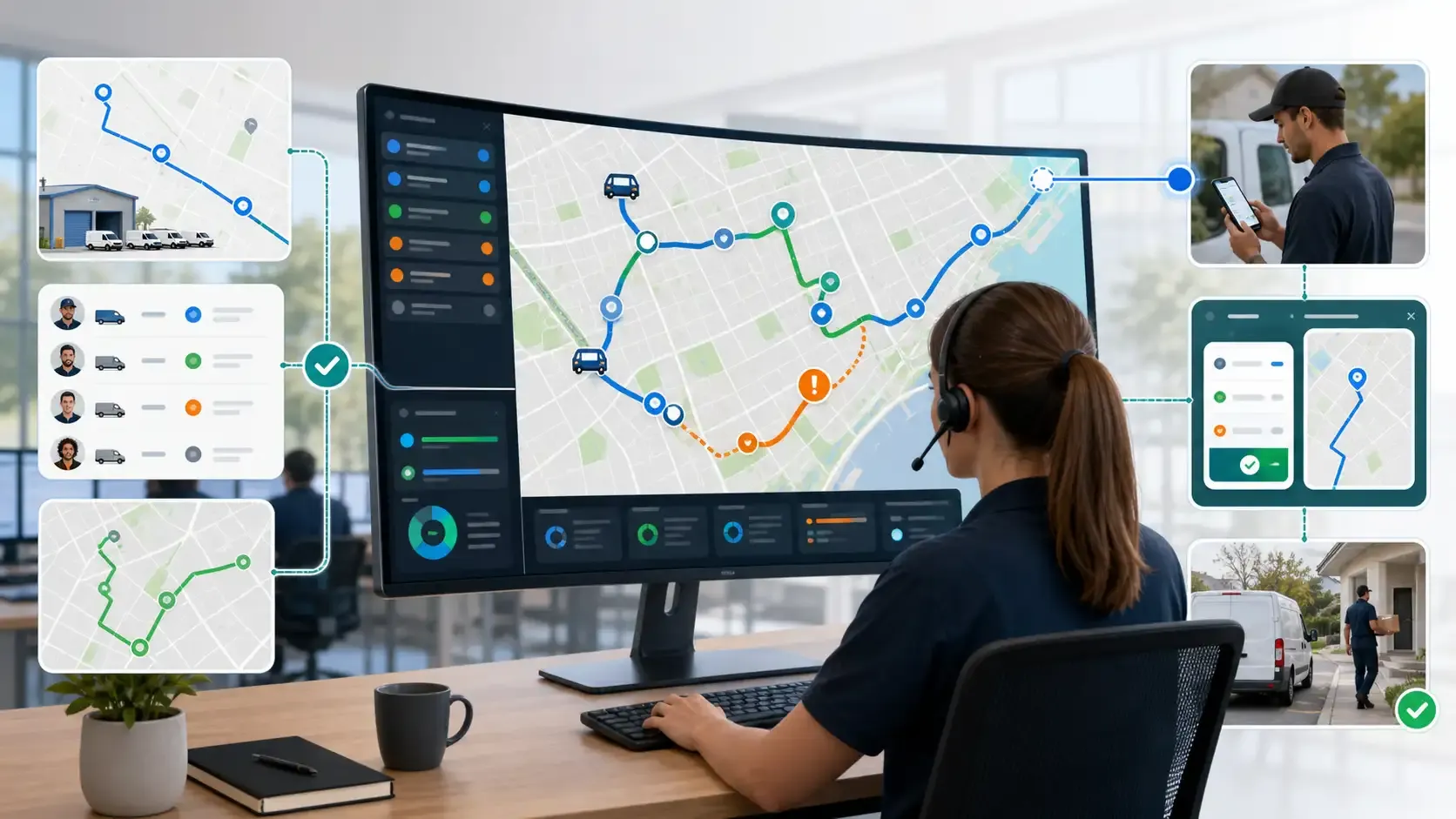
A strong dispatch workflow keeps the planned route, assigned driver, and live delivery state connected from the first assignment to the final completed mission.
Why Dispatch Visibility Matters
Dispatch visibility is not only about seeing vehicles on a map.
A dispatcher needs to understand the full operating picture:
- Which route was planned
- Which driver and vehicle were assigned
- Which missions are on the route
- Which stops are complete, delayed, or at risk
- Which exceptions need attention
- Which details the driver can see in the mobile app
- Whether the route still matches the plan
When this information is disconnected, the dispatcher has to rebuild the story manually. They may check one system for route plans, another for driver assignments, another for live status, and another for mission details.
That slows response time.
Rouptimize’s dispatcher map helps teams keep route planning, route geometry, depots, assignments, and mission context visible in one operational view.
The Three Parts of Dispatch Visibility
Daily dispatch visibility depends on three connected parts.
First, the planned route. This includes the stop sequence, route geometry, mission list, depot, vehicle, time windows, and any planning assumptions.
Second, the assigned driver. The route must be connected to the right driver and vehicle so responsibility is clear before work starts.
Third, the live delivery state. Once the driver is on the road, dispatchers need to see progress, delays, completed missions, and active exceptions.
If one part is missing, visibility breaks.
A route without an assigned driver is only a plan. A driver without route context has unclear work. A live map without mission details does not explain what needs to happen next.
Clean Handoffs Start With Route Planning
Dispatch visibility begins before dispatch.
If the route plan is created in one tool and assigned somewhere else, important details can fall through the cracks. The dispatcher may lose context about why the route was built a certain way, which time windows matter, or which vehicle constraints shaped the plan.
That is why route planning should stay connected to dispatch.
Rouptimize helps teams move from imported missions to route optimization software, route review, driver assignment, and dispatch in one workflow. This reduces the need to rebuild the plan across disconnected spreadsheets and maps.
For the full planning workflow, read route planning from import to dispatch.
Route Assignments Need Clear Ownership
A route is not ready for daily delivery work until ownership is clear.
Dispatchers need to know which driver is responsible for the route, which vehicle is being used, and whether the assignment matches the route requirements. Drivers need to receive the right work before they leave the depot.
Poor assignment visibility creates avoidable problems:
- Drivers receive the wrong route
- Vehicles are assigned to work they cannot handle
- Dispatchers lose track of route responsibility
- Drivers need manual clarification before starting
- Route changes are not reflected in the field
This is why driver and vehicle assignment should be part of the dispatch workflow, not a separate manual step.
Rouptimize’s documentation on how to assign driver and vehicle explains the operational importance of connecting route work to the right resources.
Driver Context Must Reach the Mobile App
Dispatch visibility is not only for managers.
Drivers also need visibility. They need to know which route they are assigned, which stops come next, what mission details matter, and how to complete the work correctly.
If the driver only receives partial information, the dispatcher becomes the backup system. Drivers call or message for details that should already be available in the workflow.
A strong driver delivery app helps keep route context close to the driver. This can include assigned routes, mission details, navigation context, status updates, and proof-of-delivery steps.
For Australian delivery teams managing high daily volume or wide service areas, this reduces back-and-forth communication and helps drivers stay focused on completing the route.
Live Monitoring Turns Plans Into Operational Control
Once drivers are on the road, dispatchers need to compare the plan with reality.
This is where live delivery monitoring becomes important. It helps teams see selected drivers, vehicles, current location, last update, mission status, and active delivery progress.
Live monitoring helps dispatchers answer practical questions:
- Is the route progressing as expected?
- Which driver is falling behind?
- Which stop may miss its time window?
- Which route needs attention now?
- Has the driver updated the mission status?
- Is the issue isolated or affecting multiple routes?
The value is not simply watching movement. The value is making exceptions visible early enough to respond.
Exceptions Should Be Visible Early
A dispatch workflow is only strong if exceptions appear before they become bigger problems.
Common delivery exceptions include late routes, failed delivery attempts, missed customer windows, incorrect addresses, driver delays, route changes, and incomplete status updates.
If these problems only appear after the route is finished, managers can review them but dispatchers cannot act in time.
A better workflow makes exceptions visible during the delivery day.
For example, if a driver is running late, the dispatcher may adjust expectations, reassign work, contact a customer, or investigate whether the route was overloaded. If a mission status is missing, the dispatcher can follow up before the end of the shift.
Visibility gives the team time to make useful decisions.
Route Details Need to Stay Adjustable
A dispatch plan should be clear, but it should not be frozen.
Daily delivery work changes. A customer may become unavailable. A driver may be delayed. A branch may need to add urgent work. A dispatcher may notice that a stop sequence needs adjustment before the route is sent.
This is why route details should remain easy to review and adjust.
A practical dispatch workflow lets operators inspect mission details, route geometry, stop order, driver assignment, and delivery context before and during dispatch. This helps dispatchers apply judgement without losing the structure created by route optimization.
Rouptimize’s guide on how to use the dispatcher map is useful for teams that want to understand this review layer more clearly.
Mission Context Keeps Dispatch Decisions Grounded
Dispatch visibility becomes stronger when route activity stays connected to mission details.
A mission may include the customer, address, coordinates, delivery date, branch, time window, parcel details, priority, status, and completion information. If this context is hidden, dispatchers may see that a route is delayed but not understand which mission is causing the issue.
Rouptimize’s delivery mission management software helps keep mission details connected to planning, route assignment, dispatch, driver workflow, and delivery completion.
That connection matters because dispatch decisions should be based on the actual work, not just dots on a map.
Reports Complete the Visibility Loop
Dispatch visibility should continue after the route is finished.
Managers need to review what happened so the next plan can improve. Which routes ran late? Which drivers had repeated delays? Which branches had bottlenecks? Which missions had proof gaps or failed delivery attempts?
Rouptimize’s delivery reports and analytics help teams review completed work, route performance, driver activity, and operational outcomes.
This creates a stronger loop:
- Plan the route
- Assign the driver
- Dispatch the work
- Monitor active progress
- Review completed performance
- Improve the next dispatch cycle
That loop is where dispatch visibility becomes operational improvement.
Why This Matters for Australian Delivery Teams
Australian delivery teams often manage a difficult mix of metro density, outer-suburban distance, regional coverage, driver availability, and customer delivery expectations.
A dispatcher may need to coordinate routes across Sydney, Melbourne, Brisbane, Perth, Adelaide, or regional service areas where delivery density and travel time vary heavily. In that environment, disconnected tools create avoidable friction.
Better dispatch visibility helps teams:
- Reduce manual status checks
- Keep drivers aligned with the route plan
- Spot exceptions earlier
- Improve customer communication
- Review performance after the route
- Make better dispatch decisions tomorrow
For teams evaluating route optimization software in Australia, dispatch visibility should be part of the buying decision. The route plan matters, but the handoff from plan to driver to live delivery state matters just as much.
Conclusion: Dispatch Visibility Comes From Connected Workflows
Dispatcher visibility depends on clean handoffs between the planned route, the assigned driver, and the live delivery state.
A strong dispatch workflow makes exceptions visible early, keeps route details easy to adjust, and gives drivers the context they need in the mobile app.
Rouptimize helps delivery teams connect mission management, route optimization, dispatcher maps, driver workflows, live monitoring, proof of delivery, and reporting so daily delivery work is easier to control from planning to completion.
Start free with Rouptimize
Written by

Results-oriented and visionary CEO with a passion for innovation and a track record of transforming startups into industry leaders. Seeking a leadership role in a dynamic startup environment where I can leverage my strategic acumen, entrepreneurial spirit, and hands-on experience to drive growth, build high-performing teams, and deliver unparalleled value to customers. Committed to fostering a culture of creativity, adaptability, and sustainable success.
Operations • Management • Route Optimization • Product Management • Logistics • Problem Solving
FAQ
What is dispatch visibility?
Dispatch visibility means the delivery team can see the connection between planned routes, assigned drivers, vehicles, mission details, and live delivery progress during the delivery day.
Why is dispatch visibility important for delivery teams?
It helps dispatchers identify exceptions early, reduce manual follow-up, support drivers, improve customer communication, and make better decisions before small problems become larger operational issues.
How does live monitoring support dispatch?
Live monitoring helps dispatchers see driver location, route progress, mission status, last update time, and active delivery exceptions while routes are in progress.
Why should route assignments be connected to driver context?
Route assignments need driver context so the right driver receives the right route, vehicle, mission details, and delivery instructions. This reduces confusion before and during dispatch.
What role does a driver mobile app play in dispatch visibility?
A driver mobile app gives drivers access to assigned routes, mission details, navigation context, status updates, and completion steps. This keeps field activity connected to the dispatch plan.
How can dispatch teams spot exceptions earlier?
Dispatch teams can spot exceptions earlier by connecting route plans, driver assignments, live status, mission records, and delivery updates in the same workflow.
What makes dispatch visibility useful for Australian delivery teams?
Australian delivery teams often manage metro congestion, regional distance, branch-based operations, and rising customer expectations. Dispatch visibility helps teams control daily delivery work across these conditions.